

I've spent most of the last year living and traveling in New Zealand. If you've read my journal on the move, you know the story. Mai and I love it here. I am filled with wonder by the vistas and encouraged by its people. New Zealand has also exceeded my expectations as a home to expand WitFoo internationally. In the planning, I was able to anticipate most of the challenges we would run into. Finding a home, sorting immigration, adjusting to the tempo. But one category of challenge continues to haunt me in ways I didn't expect: the quiet, cumulative disorientation of space, time and standards.
They are individually minor things. Collectively, they are sneakily exhausting.
Upside Down
This last December was my first birthday celebrated in the Summer. It was novel and exciting to think that I had graduated to being a "Summer Baby." I liked the sound of it. But this afternoon, as I was walking through Hagley Park watching the golden and red leaves begin to fall from the deciduous trees, I felt some aggravation mixed with my awe. I almost had to pull my phone out to remind myself it was March and not September. My brain has 49 years of muscle memory that says falling leaves mean football season is starting. Here, they mean it's time for the Black Caps to wrap up their summer campaign.
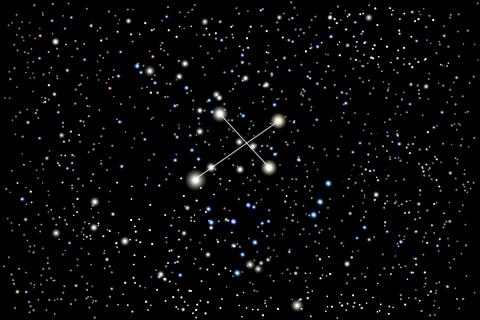
A couple of weeks ago, Mai and I had the pleasure of going stargazing at Lake Tekapo and my brain almost exploded when the guide pointed out that Polaris (the North Star) is hidden by the ground year round. The star that every Boy Scout, sailor and lost person in the Northern Hemisphere uses to find their way simply does not exist down here. We navigate by The Southern Cross instead. It sounds poetic until your internal compass has spent a lifetime calibrated to a star you can no longer see.
My brain finally reconciled last week that my Southern exposure bedroom window gets much less light than my living room's Northern facing windows. In the Northern Hemisphere, the sun tracks across the Southern sky. Here it tracks North. Every instinct I have about where the sun will be is backwards.
When I decorated our cottage for Halloween, it didn't occur to me that it was going to be broad daylight when trick-or-treaters showed up. In Christchurch, late October means the sun doesn't set until almost 9pm. The whole spooky atmosphere of the holiday depends on darkness and we had none.
These are a class of problems that a smaller proportion of humans deal with. Here's the thing: individually they're quirky anecdotes. Cumulatively, they are genuinely disorienting. There is a secondary impact too. Most large holidays in the US and Europe coincide with the sadder, darker, colder months of the year. Thanksgiving, Christmas, Hanukkah, they were designed (or at least evolved) to bring "Northerners" (including my Alabama kin) together to encourage one another in our literally darker times. Festive lights hit different when they're competing with 16 hours of summer sunshine. I am finding that I need to build new mental pathways for the emotional rhythms of the year, not just the calendar ones.
All moves, even those across a familiar town, require geospatial reorientation. But moving to under The Southern Cross carries additional challenges where North, South, up and down all have to be rediscovered.
When Is It?
Anyone who works internationally or has family abroad is familiar with the need to do timezone math. I covered some of this in my scheduling notes, but NZ adds two additional challenges to that class of dysphoria that I continue to underestimate.
First, the day starts here. When I wake up on Monday morning, it is Sunday afternoon in Chicago. I have my "first Monday" meetings with partners and customers in region. Then I go to sleep, wake up and it's still Monday. I have "second Monday" with the same class of meetings but now with US counterparts. It also means that when I'm headed to Sumner Beach for some salt water therapy on Saturday, calls from the US distract and derail me because it's Friday on their calendar. Monday isn't Monday and Saturday isn't quite the weekend.
The other issue is more insidious. Both the US and NZ have daylight saving times. That means the time difference between Christchurch and Chicago changes four times in a year. The shifts are also in opposite directions (when NZ springs forward, the US hasn't yet, and vice versa). With the time differences, it is very easy for me to miss meetings four times a year. Studies show DST alone creates cognitive stress that impacts decision making and temperament. I can't imagine doubling the shifts and making them more complex makes it better.
I am regularly still finding myself needing to stop, breathe and calculate where I am, what time it is and what season it is. I do miss knowing those things innately.
What Is It Worth?
I am also regularly confused by valuations. US Dollar is not the same as NZD (currently around 0.57 USD to 1 NZD). There is the exchange rate that I have to consider, whether GST (the 15% goods and services tax) is included, and then I need to adjust based on local cost of living. A $50 meal in NZ is not the same financial event as a $50 meal in Chicago, even after you convert the currency.
On top of being exhausting to be in a constant flow of arithmetic, it's also embarrassing (or potentially disastrous) for my role as a business leader. In the early months, I found myself quoting figures that were either offensively high or laughably low because I hadn't done the conversion properly. I now spend 20 to 30 minutes pre-calculating values before I enter negotiations so I don't accidentally insult someone or leave money on the table. It's a discipline I never anticipated needing. I wrote about math for calculating ROI years ago but never imagined the hardest math in my career would be figuring out what lunch costs.
I Miss Inches
Lastly, I can't measure anything.
Mai and I were watching a US news show in bed recently. They were describing snow fall amounts and I said under my breath, in a defeated tone, "I miss inches." She found my miserable declaration hilarious but it's true. I miss having the ability to look at something and know how large, heavy, far, fast or hot it was and having the vocabulary to describe it. When I see a weather report showing 18 degrees, my first instinct says "grab a coat" before my brain catches up and says "that's actually quite pleasant." When a recipe calls for 200 grams of flour, I have no intuitive sense of what that looks like without a scale. When a sign says a hike is 12 kilometers, I honestly don't know if I should bring a snack or a defibrillator.
When I see a news report from the US, I'm back to arithmetic to figure out if those Fahrenheit degrees are hot or cold relative to my current Celsius life. It sounds absurd. It is absurd. But it is one more thing that used to be automatic and now requires conscious effort.
Wrap Up
All of these things are slowly getting better. I am building new mental pathways that require less mathematics to navigate. Over time, autumn leaves will mean March and not September. I'll feel 18 Celsius instead of calculating it. I'll instinctively know that a kilogram of anything is about the weight of my water bottle. The double Mondays will become routine instead of disorienting.
But it has been much more taxing and draining than I would have imagined. Of all the things I anticipated being hard about this move (immigration, housing, saying goodbyes, starting over) the persistent challenges of space, time and standards were not on my list. They are the kind of problems that don't show up on a checklist. They accumulate silently, each one a tiny tax on cognition and comfort, until you find yourself standing in Hagley Park on a gorgeous autumn afternoon wondering what month it is.
I will say the best coping mechanism I've developed is one that has served me throughout this journey: pivot the frustration towards wonder. It's a practice I keep coming back to. I wrote about it in the move notes, and I lived it at Hagley Oval. Being fascinated by how wonderfully different it all is has helped me find pleasure and joy to accompany my angst. Polaris isn't gone; it's just hiding below a horizon I've never stood behind before. The Southern Cross is up there waiting for me to learn its name. The leaves are falling in March and that is, when I let it be, genuinely amazing.
Sit in the wonder. Even when the wonder is disorienting.
