GrrCON 2024 - Birthing Perjury-free AI
Abstract
Cybersecurity analysis leading to deterrence of cybercrime requires processing thousands to billions of digital signals per second. Those signals must be accurately comprehended, forensically preserved then used to detect and investigate potential cybercrime. The work products must not only assist the investigators but must be translated into language that non-technical lay audiences including judges, lawyers and jurors can understand.
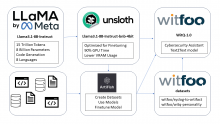
This presentation explores how generative artificial intelligence (GenAI), natural language processing (NLP), graph-theory and artificial narrow intelligence (ANI) can play a role in delivering these outcomes.
The session includes demonstrations of opensource toolkits, datasets and models designed to assist in this work.
TechnoWest 2024 - Birthing Perjury-free AI
ISSA Grand Rapids Talk - Birthing Perjury-free AI
AI Development on Windows 11: Compiling PyTorch
ChiBrrCon Talk 2: Birthing Perjury-free AI
Abstract
While believability of an AI (Turing test) is important in many applications, the need for forensic truth is paramount in cybersecurity application. In this session, we will evaluate methods for training and tuning models that meet requirements of evidence handling, business analysis and legal and martial response.
Artificial Narrow Intelligence (ANI) in Cybersecurity
People > Machines (Part Three)
Computer scientists love the idea of artificial intelligence (AI). It is the centerpiece of many mainstream science fiction works. It’s also a preferred buzzword of lazy vendors and marketers. Until computers can convince (trick) a reasonable human being that they are living beings (Turing test) all claims of AI are misleading at best. In this installment, I won’t debunk the types of claims of AI. We will examine the difference between how computers and humans think and the implications of the differences.