Building Models

Talk given at Techno Security & Digital Forensics Conference 2024 .


Abstract:

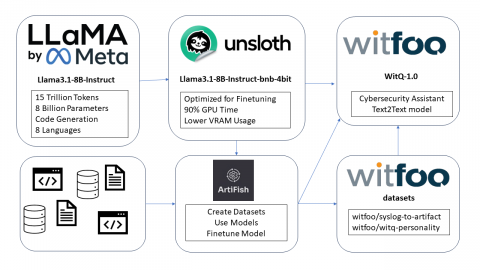
While believability of an AI (Turing test) is important in many applications, the need for forensic truth is paramount in cybersecurity application. In this session, we will evaluate methods for training and tuning models that meet requirements of evidence handling, business analysis and legal and martial response. Data verification, sanitization, and vectorization will be reviewed in this session. Research for preventing AI "hallucinations"and treating data as evidence in inferences will also be covered.

References:

- ArtiFish

- f15hb0wn/ArtiFish: Toolkit for genai in cybersecurity (github.com)

- witfoo (WitFoo) (huggingface.co)

Attachment

About the Author

Charles Herring

Charles Herring

Co-founder & Chairman, WitFoo

I started WitFoo in 2016 to make information and operations shareable across the craft of cybersecurity — between companies, law enforcement, national security and insurers, who mostly cannot see what each other sees. Before that I was at Lancope and Cisco, and I began in 2002 as Network Security Officer for the Naval Postgraduate School.

I lead research and development on a platform that ingests trillions of messages a day across hundreds of clusters. It is sold as Conductor, Reporter and Analytics, licensed flat per appliance with unlimited data — because a team charged by the gigabyte ends up making coverage decisions on a spreadsheet, months before the incident that needed the logs they dropped.

Everything here is mine, not the company's, and it wanders. Corrections are genuinely welcome — I would rather be right than consistent.

A note on how this was written: I use artificial intelligence tools to help me research, check facts, and edit these posts. The ideas, the arguments, and any mistakes are mine. I read the sources, I check the claims, and I take full responsibility for what I publish here. The views are my own and the writing is my intellectual property.